Review: The Last Day of October

Written by Phil Hickes
Illustrated byOriol Vidal
Published by Barrington Stoke (an imprint of HarperCollinsPublishers)

The Last Day of October is a superbly spine-tingling middle-grade horror story where the past comes to haunt the present with terrifying effects … an absolutely gripping page-turner that kept me spellbound, and shivering, throughout.

The small town of Column Falls, Oregon has been decorated for Halloween, ready for trick-or-treating to commence, but Cody is seeking something altogether more scary. And what could be scarier than visiting the haunted ruins of McBride House where legend has it that the ghosts of the children who were trapped in the house appear on the last day of October.

Persuading his friends Sean and Duri to go with him, the trio head into the woods where they discover the McBride house with an open door and a light in an upstairs window. Eager for adventure, Cody convinces his friends to step inside, but will they discover the terrifying truth before it is too late?

Oh my goodness! This is everything I love about middle-grade horror. It’s genuinely spine-tingling with a brilliantly eerie atmosphere that kept me on the edge of my seat. The sense of anticipation and dread builds inexorably as the children realise the horrifying fate that awaits. I loved the setting of an old house in the woods surrounded by fog, the stillness and sounds, the prescient warning and the unsettling feeling that something has been set in motion that cannot be stopped. This really is the perfect autumnal spooky season read, but one I think best enjoyed before darkness descends – and preferably tucked up under a cosy blanket with some hot chocolate. No, on second thoughts, no hot chocolate – its guaranteed to spill as you shiver with fright!

The stunning illustrations, with a focus on light and dark, complement the eerie atmosphere and hidden terrors of this story perfectly.

Treat yourself to a genuinely spooky read which might just have a few tricks to play … perfect for readers of 9+.

Thank you to Barrington Stoke for sending me a copy in exchange for my honest opinion.

This book is published by the wonderful Barrington Stoke who publish dyslexia-friendly, super-readable and accessible books for children of all ages. This is suitable for 9+ with a reading age of 8.

Review: The Night House Files: The Wintermoor Lights written by Dan Smith and illustrated by Luke Brookes

The Wintermoor Lights is the second classified case in The Night House Files and what a chilling, thrilling and terrifying case it turns out to be. I was absolutely hooked from start to finish and cannot recommend this series highly enough to readers of 11+.

Tara Fisher’s best friend, Zoe, has suddenly changed. Rather than hanging out with Tara and their friend Dennis, she has become friends with arch-enemy Jackie. Could this have anything to do with the mysterious lights that Zoe witnesses over Wintermoor on her way home from an early morning swim?

It is not long before more and teenagers witness the lights, often appearing in a trance-like state, and sharing that they have been ‘chosen’. Whilst Tara has the unsettling feeling that something dangerous and strange is happening, and is determined to discover the truth as she becomes increasingly isolated, parents and teachers dismiss it as a teenage prank. If only they had listened, then the children might not have started to disappear …

This is an incredibly gripping read, made even more so as it feels like these events genuinely took place thanks to the use of newspaper articles, interview transcripts, diary excerpts and a reliable narrator. Now, I wonder where the real Wintermoor is?

The illustrations are absolutely stunning and really capture both the fear and tragedy engendered in this case as well as the chilling horror visited upon Wintermoor by something … but I’ll let the reader find out the truth for themselves.

Another unmissable and compelling case from The Night House Files. And now I’m eagerly awaiting the next case: The House of Horrors, released in May 2026.

Thank you to Barrington Stoke for sending me a copy in exchange for my honest opinion.

This book is published by the wonderful Barrington Stoke who publish dyslexia-friendly, super-readable and accessible books for children of all ages. This is suitable for 11+.

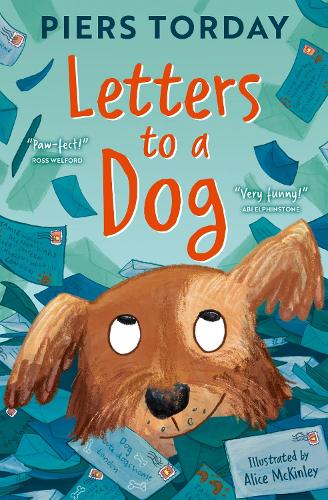
Review: Letters to a Dog written by Piers Torday and illustrated by Alice McKinley

Written by Piers Torday
Illustrated by Alice McKinley
Published by Published by Barrington Stoke (an imprint of HarperCollinsPublishers)

Letters to a Dog is a poignant, heart-warming and humorous story that brought both tears and smiles as a grieving father and son find a way to re-connect in the most magical way.

Eleven-year-old Jamie adores animals and longs for a pet and, one pet in particular: an adorable brown-and-white terrier who he had met whilst at the dog home, pretending that he was looking for an adoptive dog even though he knows his dad is not keen.

Whilst in hospital facing a life-changing operation, nurse Shirley suggests that he writes a letter to the dog which seems a good idea to Jamie as he is desperate to share his feelings with someone. He cannot share them with his dad because Jamie has fallen out with him, and is refusing to speak to him, until he allows him to open up about how he is feeling after the loss of his mother.

Imagine his excitement and surprise when Dog writes back – he’s got his very own dog pal! And so begins the most wonderful correspondence – honest, funny and hopeful – and a way for two who are lonely and miss what they have lost, to make a fresh connection.

This is a beautifully told, empathetic story that does not shy away from the heartbreak that families go through when dealing with loss and the different ways that people cope with grief. It also a story that shines with love, memories and promises fulfilled.

The illustrations are absolutely wonderful in two different styles. One has more simple line drawings capturing Jamie’s sketches in his letters to Dog. The others are gorgeously detailed illustrations showing things that have deep meaning for Jamie including his time in hospital, visiting dog and memories of his mum. The final illustration is absolutely perfect – and captures the essence of the story perfectly.

A paw-some blend of humour and heart, of finding a way to communicate and re-connect, and of an adorable dog who brings a family together again.

Thank you to Barrington Stoke for sending me a copy in exchange for my honest opinion.

This book is published by the wonderful Barrington Stoke who publish dyslexia-friendly, super-readable and accessible books for children of all ages. This is suitable for 9+ with a reading age of 8.

Review: The Elixir written by Lindsay Galvin and illustrated by Kristina Kister

Written by Lindsay Galvin
Illustrated by Kristina Kister
Published by Published by Barrington Stoke (an imprint of HarperCollinsPublishers)

The Elixir is an absolutely compelling historical fantasy novella, set in seventeenth century England, that completely captured me, holding me utterly entranced from start to finish.

Ann Storer lives in an apothecary shop with her parents, older brother and sister, Edward and Katherine. Whilst the rest of her family follow recipes to make tinctures, Ann’s creations follow no such structure, yet have a more powerful healing effect on those she makes them for. Ann believes that her medicines are more successful for two reasons, both of which she keeps secret from her family: her ability to see a person’s colours to understand what she needs to give them to heal, and the secret spiral mark she scratches into the bottom of the tincture bottle. Someone did know her first secret and taught her the second: her Grandmother, a herbalist and healer, who was accused of witchcraft but who died in the local jail before officially convicted.

Whilst her parents have been called out of town on apothecary business, they leave their children to welcome their new boarder: Isaac Newton. He has an interest in apothecary and carries out his own experiments in his attic bedroom whilst attending the local grammar school to study. Having Newton boarding in their home does not deter Ann from making her tinctures and collecting herbs under the moonlight so that she can continue to heal those in need.

But, when witchfinder, Abel Geach, arrives in town, Ann knows exactly where he will look first. Can she keep him from discovering her secrets, secrets that would certainly see her accused of the devil’s work – just like her Grandmother?

When Ann is in danger of having one of her special bottles found by Geach, Newton helps her and she finds herself telling him about her synaesthesia which leads to them creating the Elixir of Life, a potion with the power to heal all ailments and even prevent death. Newton warns her that they should keep their discovery hidden, and untested, until the witchfinder leaves.

But then the plague strikes and danger comes for her family … what is Ann prepared to risk to save the lives of the people of her town?

This is a truly gripping story where the tension is palpable as danger builds and impossible choices are made. There are plenty of unexpected twists and turns with an ending that took me completely by surprise. A masterful blending of history, science and fantasy that left me utterly captivated – and astounded!

The illustrations are absolutely stunning and capture the time period and the emotion of the story perfectly.

An enthralling page-turner that captures the indomitable spirit of a young girl who uses her innate abilities to help others and stand against hatred and prejudice.

Thank you to Barrington Stoke for sending me a copy in exchange for my honest opinion.

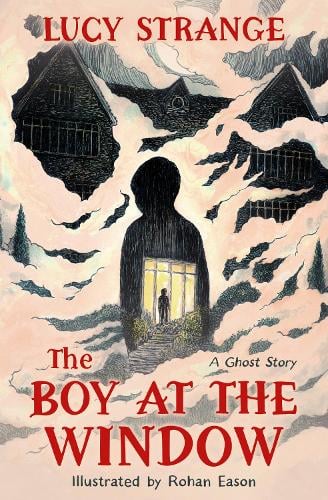
Review: The Boy at the Window

Written by Lucy Strange
Illustrated by Rohan Eason
Published by Barrington Stoke (an imprint of HarperCollinsPublishers)

The Boy at the Window is a spine-tingling, poignant gothic ghost story which held me utterly entranced from the opening line:

I first saw the ghost on a cold autumn night.

Whilst the heavy, thick fog surrounding Hugo’s home might play tricks on the imagination, Hugo is convinced that what he sees at the window is real – a real ghost boy!

Hugo lives with his mother and housekeeper after having been sent home from boarding school due to an illness. His father has been missing for over a year since the end of the war but his mother still waits for him to return home despite no news of his survival. His mother has withdrawn in to a world of her own, haunted by the loss of her husband yet unable to accept that he is gone. When a telegram arrives, she becomes even more unwell …

When Hugo continues to see the ghost boy with his haunted, hollow eyes, he has a disturbing realisation, and wonders what would happen if he lets the boy inside …

What a perfect ghost story: atmospheric, eerie and haunting. The sense of foreboding is palpable and gives the story an unsettling feeling as the thick, lingering fog clings to the house. I really liked the dual role played by the fog as its impact is felt both inside and outside the house. The use of both sounds and silences really builds the tension as do some brilliant cliffhanger chapter endings. I could really feel Hugo’s fear, loneliness and sense of isolation as his mother becomes more and more withdrawn from reality and lost from her son. The genius of this book is that it can be enjoyed as an eerie, gripping ghost story with an incredible twist by readers at the upper end of Key Stage 2, but can also be studied well in to Key Stage 3 as a masterpiece in the gothic genre with opportunities to discuss the psychology of ghost stories.

The illustrations are absolutely perfect from the swirl of fog drifting along the bottom of each page to the use of light and dark within the images to create a sense of things hidden and revealed.

A thought-provoking, powerful and haunting ghost story that will linger long after it has played its last trick … just incredible!

Thank you to Barrington Stoke for sending me a copy in exchange for my honest opinion.

This book is published by the wonderful Barrington Stoke who publish dyslexia-friendly, super-readable and accessible books for children of all ages. This is suitable for 9+ with a reading age of 8.
Review: The Relic Hunters – The Clockwork Key

Written by Vashti Hardy
Illustrated by Rebecca Sheerin
Published by Barrington Stoke (an imprint of HarperCollinsPublishers)

It’s time to get out the emergency confetti!  The Clockwork Key is the first in a new series, Relic Hunters, where steampunk fantasy, archaeology and STEM combine in an exciting adventure … and it’s absolutely brilliant!   

Siblings Mabel and Will Greystone are excited to be going on their first expedition with their Aunt Lucy, a relic hunter who searches the world for ancient objects.  Once aboard the Steam Flyer train, their aunt wastes no time in sharing a map which she hopes will direct them to Umber, a town famous for the invention of clockwork, but now abandoned and lost to the world.  When the trio are disturbed by devious hunter, Byron Cogsworth, they plot to throw him off the trail …

Travelling by steam train and airship, they eventually arrive in Marvolia before boarding a cog cruiser in search of the lost town.  Will this daring trio find Umber before the dastardly Byron rumbles that he has been tricked?  And could an old clockwork key left behind by the last inhabitant of Umber unlock secrets that could bring danger for the explorers?

This is a brilliantly imaginative, action-packed Indiana-Jones-esque adventure with a wonderful blend of archaeology, fantasy and technology.  I loved the ominous feeling of danger being just around the corner, the incredible discoveries and the revelation of a mystery in need of solving … before it is too late.

As well as being a thrilling adventure, there are also some important messages about rightful ownership of relics, the responsibility that comes from being a relic hunter and about leadership.

I loved the close bond between the Greystone siblings and Aunt Lucy who clearly loves taking them along on her expedition and teaching them about ethical archaeology.  Whilst the children have different personalities, they prove themselves to be the perfect relic-hunters-in-training whilst on the expedition.  Mabel is impulsive, clever, curious and a risk-taker which can get her into, and out of, trouble!  Will is quieter and more wary of adventure, but is a keen photographer who documents what is discovered.  And then there’s Grimm who is sarcastic, grumpy and ‘not’ a lover of cuddles – but utterly adorable! 

The full-and-partial-page illustrations throughout are gorgeous, expressive and capture the heart of this exhilarating adventure perfectly. 

What a fantastic start to this thrilling new adventure series and I have no doubt that young readers will be eagerly anticipating the relic hunters next adventure.

This book is published by the wonderful Barrington Stoke who publish dyslexia-friendly, super-readable and accessible books for children of all ages.  This one is for ages 9+ with a reading age of 8.

Thank you to Barrington Stoke for sending me a copy of The Clockwork Key in exchange for my honest opinion.

Review: The River Spirit written by Lucy Strange and illustrated by Júlia Moscardó

Written by  Lucy Strange
Illustrated by Júlia Moscardó
Published by Barrington Stoke

The River Spirit is a powerful, poignant and hopeful story intertwining history and myth to create a richly atmospheric tale which completely entranced me.    

Young chimney sweep Tom Waterman has started seeing strange things that should not be there:  a soot monster in the chimney, fairies in the flowers by the river and the ghosts of dead ferrymen in the reeds.  When Tom and his friends, Bert and Squirrel, are taken to the river by their cruel master, Mister Crow, for their weekly wash, he sees another supernatural being, a river spirit, but she is different to the other beings as she can be seen by Mister Crow and Tom’s friends. 

After saving him from Mister Crow’s cruelty, Elle follows Tom, and is with him when he has to clean chimneys, filthy, soot-laden chimneys that are becoming too narrow for him to climb.  His job is a dangerous one, and when Tom puts the safety of a new apprentice above his own, the purpose of Elle’s appearance becomes apparent …

This story does not shy away from the harsh reality of life for young chimney sweeps in 19th century Britain.  Tom and his friends are bought by a Master Sweep and become his property, and are denied their freedom as they are forced into a dangerous job which many do not survive.  The children’s appalling living and working conditions portrays the heart-breaking reality of young children forced into child labour as they are poor, orphaned or have had to become money-earners to support their family.  This historical background will open up discussions about child labour in 19th century Britain and encourage empathy both for children in this historical period, but also open opportunities to discuss modern-day child labour.

My heart ached for Tom as he daydreams of a life before his freedom was taken from him when he was six, bought from the Poor House, and forced to work as a climbing boy by a harsh master who cares nothing for his apprentices’ wellbeing.  Tom, a ferryman’s son, never forgets where his true home is and the importance of his name, and feels close to home when he is washing in the river where he first meets Elle.  He longs for the freedom of the river, yet is trapped in exploitation by a terrifyingly cruel owner.  Tom is such an empathetic young boy, showing kindness, friendship and protection towards others.  Tom’s decision to protect a new apprentice is a catalyst for change, and his courage brings hope of a better life for others. 

The illustrations are stunning and perfectly capture both the ethereal elements of the story and the heart-breaking reality of life for young chimney sweeps. 

The River Spirit is a heart-rending novella portraying the dreadful working and living conditions faced by young children in 19th century Britain, but it is also a story of friendship, kindness and hope.

This book is published by the wonderful Barrington Stoke who publish dyslexia-friendly, super-readable and accessible books for children of all ages. This is suitable for 9+ with a reading age of 8.

Thank you to Barrington Stoke for providing me with a copy in exchange for my honest opinion.

Review: Drowning in my Bedroom

Written by  Steve Cole
Illustrated by Oriol Vidal
Published by Barrington Stoke

Drowning in my Bedroom is a hard-hitting, powerful and absolutely gripping story told through the eyes of two incredible children living in Manila who are brought together in a fight for survival. 

Eleven-year-old Junjun lives in a shack under a bridge in Manila with his mother, father and four sisters.  He does not go to school, but earns money for his family by begging from passing strangers in the street.  When he sees a girl in a wheelchair, he is glad that he is not her …

Gayla is staying at a residential care centre to learn to adapt to using a power wheelchair even though she doesn’t want to use it as she already feels different enough from other children.  When she sees a boy sorting through a pile of junk, she is glad she is not him …

When he arrives back at the bridge, Junjun discovers that a storm surge has destroyed his home, and left one of his sisters in need of medical care.  Whilst his mother has taken her to try to find a Doctor, Junjun is left with instructions to wait for his father so that they can start to rebuild their home, but he needs to get medicine for his sister …

Gayla is woken by the typhoon-level storm that has destroyed Junjun’s home.  She refuses to be evacuated to the local primary school and instead is determined to wait at the Centre for her father to collect her.  But then she finds herself alone … until she meets Junjun hiding in the kitchen, hoping to find medicine for his sister.

Can these two children work together to survive as the water levels rise inexorably, trapping them in the Centre? My goodness, this was such a tense, heart-pounding read as Junjun and Gayla fight for survival with the very real threat of drowning in the ever-rising flood water.

This is a story that addresses poverty, disability and climate change through the eyes of two children who pull no punches when talking about these in a brutally honest manner as they make connections with each other.  Gayla shares the unfairness inherent in the people of the Philippines suffering the effects of global warming when they are only responsible for half a percent of the total global emissions:  they suffer due to the actions of other countries.  Junjun and Gayla are such strong, inspirational children – not looking for pity and refusing to be defined by other peoples’ expectations and prejudices because of the situations they were born into.  This is certainly a story that encourages empathy and understanding, and which will open discussions around climate change, inequalities and global citizenship. 

The full-and-partial-page illustrations are poignant and powerful and are a testament to both the danger and hope within the story.

This is a thought-provoking, compelling novella and one which I cannot recommend highly enough to readers of 11+ .

This book is published by the wonderful Barrington Stoke who publish dyslexia-friendly, super-readable and accessible books for children of all ages. 

Thank you to Barrington Stoke for providing me with a copy in exchange for my honest opinion.

Review: Little House

Written by Katya Balen
Illustrated by Richard Johnson
Published by Barrington Stoke

Little House is a powerful, poignant and empathetic story that speaks such heartfelt truth about home, family and hope.

Juno doesn’t want to stay in the countryside with her grandfather for the summer as she’d rather be spending it in the city, enjoying time spent with her friends.  She doesn’t really understand why her mother has to leave her even when she explains to Juno that she wants to help children who have lost their homes and family. 

Whilst Grandpa is spending time in his workshop, Juno explores his house and, in the attic, discovers a homeless, abandoned family of dolls and a neglected little house.  She immediately feels a connection with this lost family and a responsibility towards them.  Can she make them a new home and, at the same time, learn to understand and accept the choices her mother has made?

This may be a short story but, my goodness, it is a much-needed call to empathise with all those who have been torn from their homes in whatever circumstances.  Through Juno’s epiphany, she comes to understand the importance of home and caring for the plight of others.  This is a story that offers so much opportunity to open discussion about what makes a home and the importance of actively caring for others. I think the metaphor of the doll house and family is a brilliant way to sensitively engage children in empathising with what is happening to children and families in many places in the world. 

Juno goes through a turmoil of emotions (including anger, resentment, fear and loneliness) as she moves from feeling powerless to feeling empowered through her desire to help, and the strong, empathetic feelings this engenders.  Her grandfather’s gentle, kind nature and his practical and emotional support is just what Juno needs as she works through her own changing feelings.

This is a beautifully told, thought-provoking novella with a message that brought tears, brought anger, and brought hope.  It has had such an impact on me as an adult reader, and I have no doubt will be a story that speaks to the hearts of younger readers.   

The full-and-partial page illustrations are absolutely stunning and really express the importance of home, family and love in such a warm and tender way. 

This is the author’s third novella for Barrington Stoke and is another triumph of heartfelt writing carrying important messages that will encourage empathy and discussion.  I can’t recommend this highly enough and think it is a story that should be shared in every school.

This book is published by the wonderful Barrington Stoke who publish dyslexia-friendly, super-readable and accessible books for children of all ages.  This one is for ages 9+ with a reading age of 8.

Thank you to Barrington Stoke for providing me with a copy in exchange for my honest opinion.